


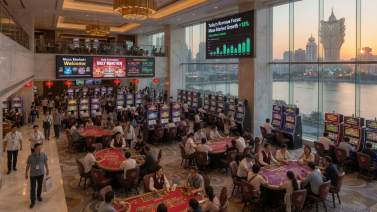
In recent developments, the International Monetary Fund (IMF) has elucidated the dynamics of Macau’s casino industry, projecting a significant shift from VIP to mass-market gaming in the years following the Covid-19 pandemic. This forecast emerges despite modest signs of revival in the VIP segment, highlighting the transformative phase that Macau's gaming landscape is currently undergoing.
The IMF's recent consultation report sheds light on these changes, underscoring how mass-market gaming has become the primary driver of revenue growth in Macau.
Regulatory Changes and Economic Impacts on Macau's Revenue
In 2025, the IMF noted that mass-market gaming constituted approximately 73% of Macau's casino gross gaming revenue (GGR). This marks a notable shift as the sector recovers from the pandemic. Despite some resurgence in the VIP segment, its contribution to GGR remains less substantial, a trend likely influenced by revamped regulations following the 2022 gaming-law reforms. These amendments aimed to enhance governance and improve measures against money laundering and terrorism financing (AML/CFT).
The report further details how these regulatory frameworks, including tighter restrictions on junket operators, are reshaping the market dynamics. In 2025, Macau’s casino GGR rose by 9.1% compared to the previous year, achieving about 85% of its level in 2019. The first half of 2026 witnessed another 6.9% increase in GGR, primarily driven by mass-market activities, showcasing the liquidity in this segment despite the industry's broader challenges.
Broader Economic Outlook and Diversification Challenges
Despite the positive trends in gaming and tourism, Macau's total economic output remains approximately 10% lower than pre-pandemic levels, reflecting ongoing 'structural changes' and weaker demand from high-end clientele. The IMF attributes some of this shift to the stringent regulation of VIP gaming, including measures like stricter licensing and constrained credit provision.
Macau's economic structure, deeply intertwined with its casino sector accounting for 40 to 45% of GDP, makes it susceptible to external disruptions and market volatility. With mainland China visitors making up 70% of tourists, any economic slowdown there has direct ramifications on Macau's financial health. The IMF forecasts a tapering down of Macau’s GDP growth rate, predicting a decline from 4.7% growth in 2025 to 3.3% in 2026, and further to 3.1% in 2027.
Achieving diversification as planned in Macau's Third Five-Year Plan, which targets 60% of GDP from non-gaming activities by 2030, will necessitate significant investment in skills, infrastructure, and creating a conducive business environment. Throughout this transition, Macau’s reliance on gaming revenue persists, albeit now coupled with efforts to bolster non-gaming sectors.
The IMF acknowledges the ongoing challenges of economic diversification, citing a negative output gap of 1.6% expected to narrow by 2030. Nonetheless, gaming revenue, alongside a revival in private investments linked to commitments by casino operators for non-gaming ventures, continues to be a pillar of support for Macau’s economic trajectory.
Source: VIP gaming's share of Macau revenue to remain low amid market shift to mass: IMF, GGRAsia, September 30, 2026.

Posted by Wizard
Sep 30 2026
Sep 30 2026
Comments
No comments for this article.